We’re at a turning point between seasons where winter fully releases it’s hold and the energy of growth, fertility and life begins to rise, but like all thresholds it was never just about light returning. It was about what happens in the in between, spirits move freely, the veil between worlds hastened and the unseen becomes closer, more active, more aware and celebrations are seen as something powerful, and unpredictable.
The nights are not controlled. Their open fires were lit not just for festivity, but for protection and not everything that moved through these nights was welcomed. It sits at the edge of opposites, light returning, but darkness still present, life rising, but spirit still mirrors celebration above while something else moves below.
Energy shifts where boundaries loosen, and where intention matters more than usual. The doorman begins to stir. It is when the world opens and what you invite, acknowledge or ignore has a way of responding. It’s a time for breaking patterns. It’s a time for cutting attachments , working with fire as transformation and not comfort, but standing between what was and what is about to become. If you’re willing to stand in it without stepping back, this time will show you exactly what needs to burn for you to move forward. Nights of feral, untamed energy, moments when the lingering, stubborn chill of winter is finally forced to surrender to the wild fertile push of spring, half light,half dark.
It’s a mirror image of the ascent we take in October. You shed the heavy layers, light a fire and remember that the deep magic doesn’t only wake up in the autumn. Nights for spell work, banishing, protection and spirit communication are prioritized, crossroads, mountains, and wild places are used as virtual sites because they already hold liminal qualities, offerings left, reinforce and practitioners move with awareness of what could be contacted or drawn in because when the veil thins and movement between realms becomes easier, what you call and what you release and what you failed to contain matters.
The awakening of our inner flame, the spark of consciousness, independence, and self-mastery that exists within every individual who refuses to live blindly as the hidden becomes revealed in our work. The work of the witch is to make it safe to be powerful again.
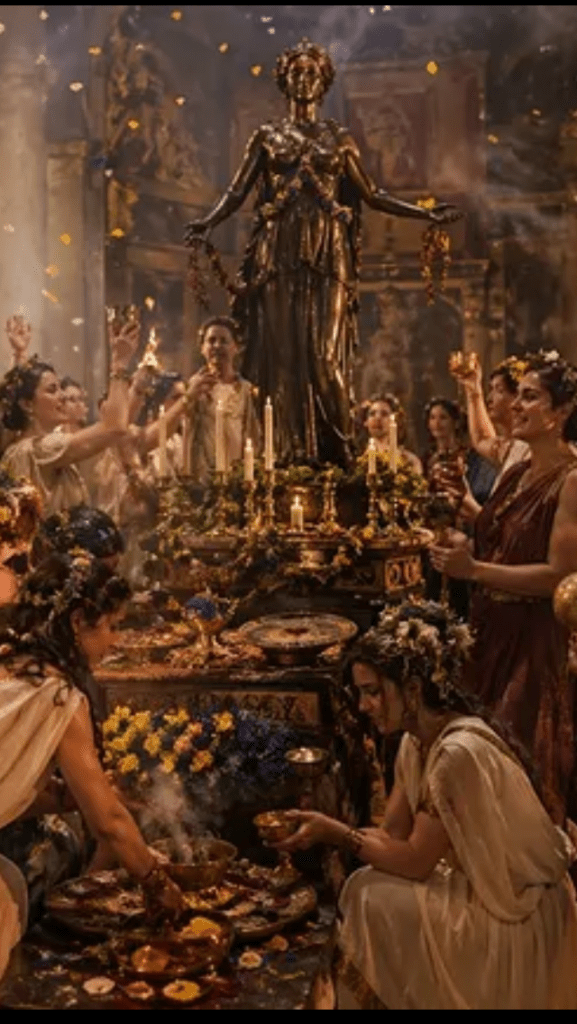
Bona Dea had a secret festival, attended only by women, whether patrician, free or slave, that took place over the night of the 3rd and 4th of May (and/or December). It was held during the Faunalia, and was referred to as the sacra opertum, (“the secret or hidden sacrifice”): at this ritual sacrifices were made for the benefit of all the people of Rome, something proper to the realm of a Mother or Earth Goddess who is concerned with the well-being of all of Her children.
Her rites allowed women the use of strong wine and blood-sacrifice, things otherwise forbidden them by Roman tradition.
Men were barred from Her mysteries and the possession of Her true name. There were other taboos concerning the worship of the Bona Dea: neither wine nor myrtle were to be mentioned by name during Her secret festival, likely because they were both sacred to Her and therefore very powerful.
Her husband, Faunus, the God of the Wild (later equated with the Greek Pan), came home once to find She had drunk an entire jar of wine. For being drunk He beat Her to death with a myrtle scourge, and this was why myrtle was forbidden, and wine had to be referred to by another name, ‘milk’ and the jar itself was called a mellarium, or ‘honey jar’.
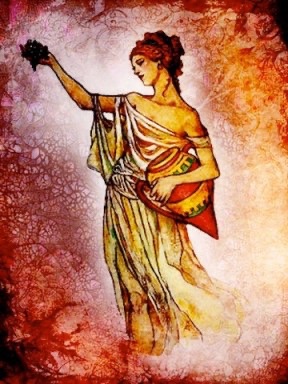
Bona Dea’s themes are femininity, blessing, fertility, divination and abundance. Her symbols are vines and wine. Bona Dea’s name literally means ‘good Goddess’. Her energies come into our lives at the outset of this month, offering all good things, especially fertility and a greater appreciation of the Goddess within each of us. Traditionally, Bona Dea is a women’s Goddess who received offerings of wine in exchange for prophetic insights during Her observances.
On this night the festival was held in the house of the consul (the chief elected official), and no men were allowed. This taboo extended even to paintings or statues of men, which were required to be covered during the rites—and one assumes the consul himself crashed at a friend’s place for the night. The Vestal Virgins officiated, led by the wife of the consul (probably symbolic of the ancient Queen, on whom fell certain sacred religious duties), and the house was decorated like a temple with garlands of leaves and flowers of all kinds, except for myrtle of course, and the women wore wreaths of grape leaves.
After making libations to the Goddess, music was played and the women drank and danced.
Invocation to Bona Dea
O Bona Dea,
Good Goddess of the Earth
Whose name is mystery,
Whose name is a hundred names,
Whose spirit lives in us all
And in every goddess who touches the soil,
And in every mortal who sprang from the clay,
Be with us on this day!
You have made the Earth spring forth
With many green goods for us,
Not merely those with which me feed our bellies,
But also those which heal our bodies.
Lady who heals us, godmother of Hygeia,
Daughter of Faunus who tracks in the wild,
We find your gifts both in our gardens
And on the wild paths where you have trodden.
We see the healing herbs springing up
In each of your passing footprints,
And we are grateful for our lives.
O Bona Dea,
Good Goddess of the Earth

